Most people planning a Nepal trek don’t even consider Langtang. They go straight to Everest Base Camp or the Annapurna Circuit. Which is fair – those are great treks. But Langtang sits just 7-8 hours by road from Kathmandu, requires no flights, costs less, and takes you through scenery and culture that’s every bit as good. Sometimes better.
I’m Janak, a licensed local trekking guide from Nepal’s Ruby Valley. I’ve guided the Langtang Valley trek many times, including an 8-day trip with a trekker named Laura from Australia who called it one of the best experiences of her life. I know this valley well – the trails, the families running the tea houses, the viewpoints most groups walk straight past, and the story behind this place that most guides don’t really talk about.
This is a proper guide to the Langtang Valley Trek in 2026. What it is, what it costs, when to go, and what’s actually worth knowing before you book.
What Is the Langtang Valley Trek?
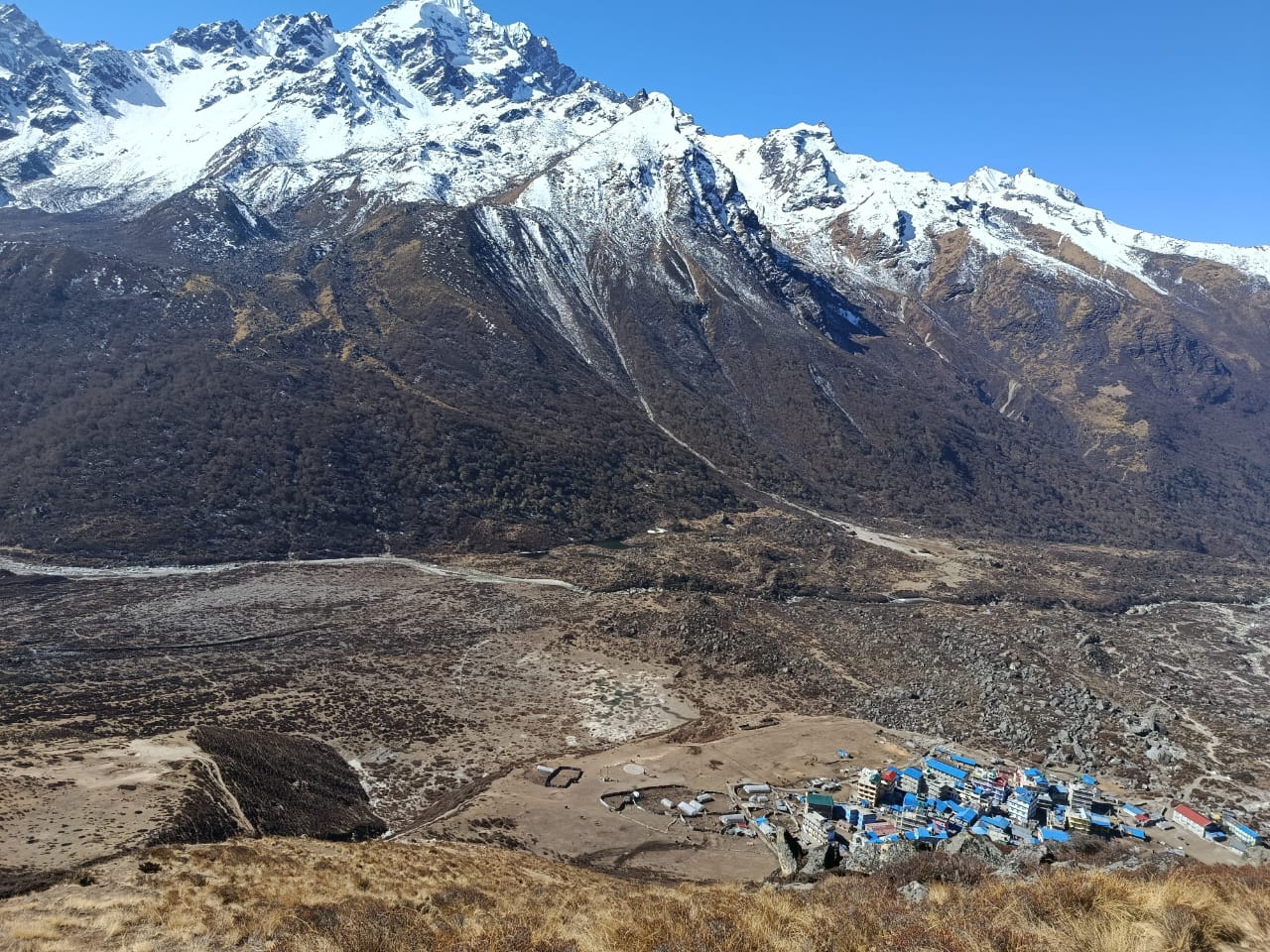
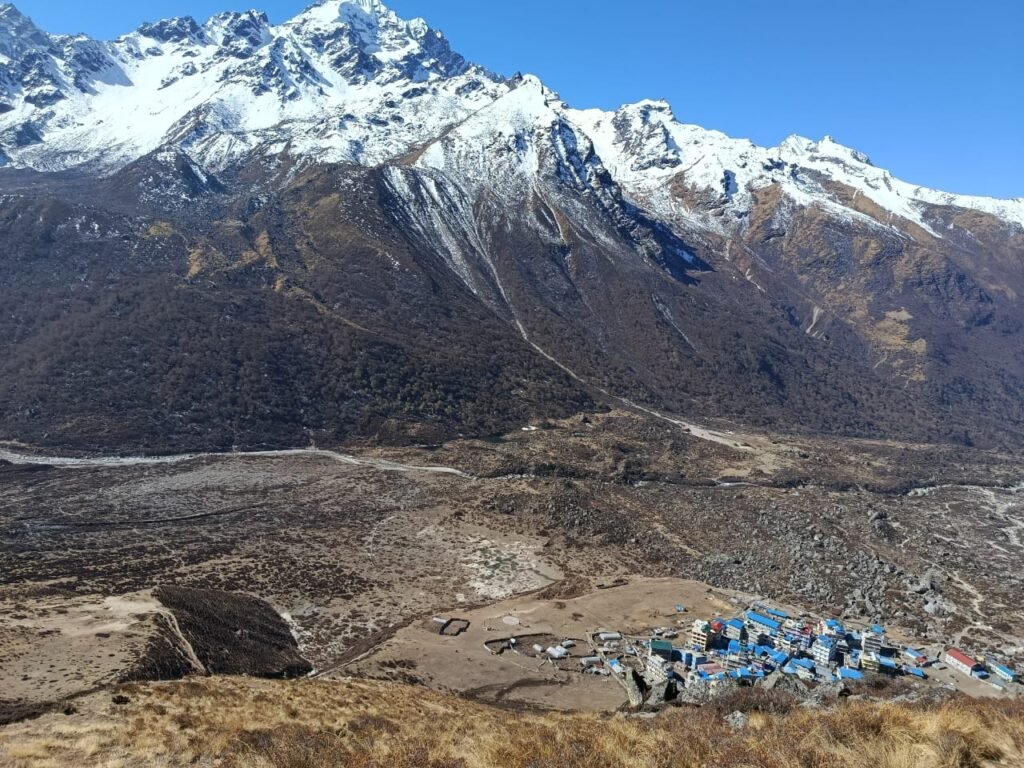
The Langtang Valley Trek follows the Langtang Khola river north from Syabrubesi through rhododendron and oak forest, past Tamang villages, into a wide glacial valley, and up to Kyanjin Gompa at 3,798m. That’s where most people spend a rest day and do a summit hike to either Kyanjin Ri (4,773m) or Tserko Ri (5,033m). The route is out-and-back, which sounds repetitive. It rarely feels that way. The valley looks completely different on the descent – different light, different perspective – and you notice things on the way down that the effort of climbing makes you miss going up.
Key facts of Langtang Valley Trek
• Distance: Around 65 km round trip
• Duration: 7 to 10 days including travel from Kathmandu
• Highest point on trail: Kyanjin Gompa at 3,798m
• Optional summit: Tserko Ri at 5,033m (day hike from Kyanjin Gompa)
• Start and end point: Syabrubesi, 7-8 hours by road from Kathmandu
• Difficulty: Moderate – beginners can do it with proper preparation
• Best seasons: Spring (March to May) and Autumn (September to November)
• No flights needed – the only major Nepal trek you can reach entirely by road from Kathmandu
The Part of This Valley’s Story Most Guides Skip
On April 25, 2015, a 7.8 magnitude earthquake hit Nepal. The shaking triggered a massive avalanche off Langtang Lirung. It buried the village of Langtang in seconds. Nearly 100 people died. The landscape where yak pastures and pine forests had been for generations became a grey rubble field stretching two kilometres across the valley floor.
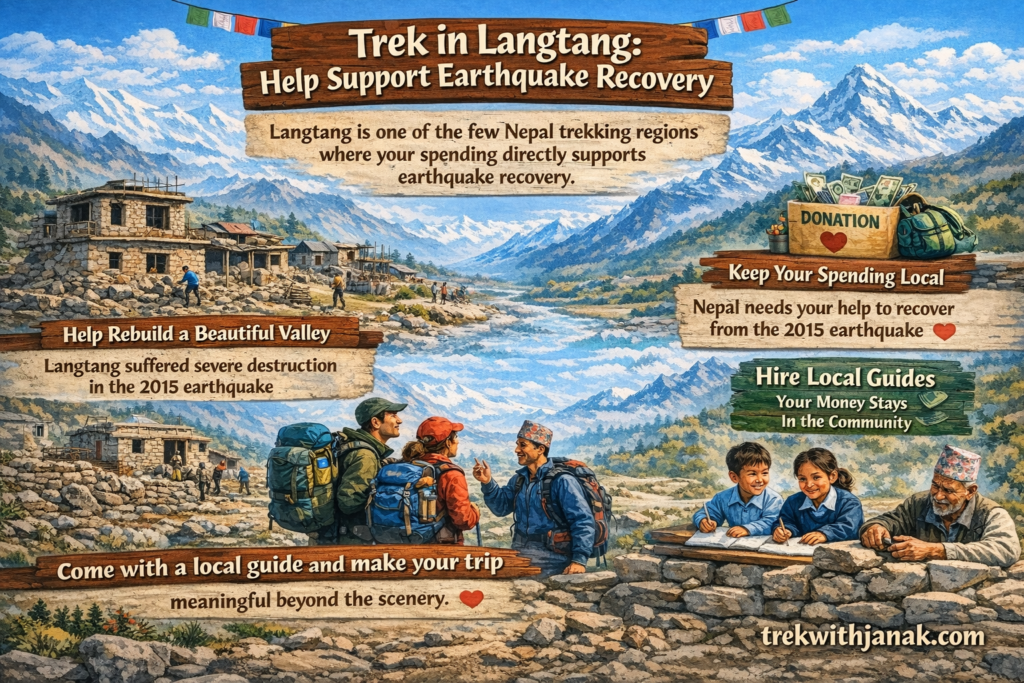
Today the village has been rebuilt. The trails are open. The tea houses are running. The Tamang families who survived came back, and they welcome trekkers the same way they always did. When I walk through Langtang Village with my trekkers, I stop and talk about this. I showed them where the old village was. Sometimes I introduce them to families who were there. Because understanding what this place went through changes how you look at the mountains above it.
Trekking in Langtang now isn’t just an adventure. Every rupee you spend here – accommodation, food, guide fees – goes to people who are still rebuilding. That’s worth knowing.
Why Go With a Local Guide?
The valley has layers
The Tamang people of Langtang have a culture rooted in Tibetan Buddhism. It shows in their stone houses, the way they run their monasteries, the ceremonies they hold through the year. As a local guide I don’t just point at things – I introduce you to people.
The monk at Kyanjin Gompa who has kept the butter lamps burning since before the earthquake. The family at Lama Hotel who’ll let you sit by their fire if you’re with someone they trust. None of that is in a guidebook. It happens because of who’s walking beside you.
Altitude needs watching
Langtang climbs fast. From Syabrubesi at 1,460m to Kyanjin Gompa at 3,798m in three days of walking. For people who’ve never been at altitude before, that ascent rate needs careful monitoring.
I’m certified in wilderness first aid and altitude medicine. I watch every trekker throughout the day – breathing, mood, coordination, appetite. I know the difference between normal trail tiredness and the early signs of something that needs attention. Every trek I’ve guided has a 100% safety record.
That’s because safety isn’t something I add on – it’s built into every decision about pace, rest days, and how we move through the valley.
Knowing the trail properly
I know which section of trail has the best angle on Langtang Lirung at sunrise. I know which tea house between Lama Hotel and Langtang Village has the warmest kitchen. I know the path above Kyanjin Gompa that most groups walk past, where on a clear morning you can see the whole glacier system below you in silence.
Following a trail and actually experiencing one are different things.
The Itinerary: Day by Day
Below is the standard 8-day itinerary I use as a starting point. I adjust the pace, rest days, and side trips for each trekker depending on their fitness and what they’re looking for.
Day 1: Kathmandu to Syabrubesi (1,460m)
7 to 8 hours by road, following the Trisuli River north through increasingly dramatic hills. The road gets rougher after Dhunche but the scenery more than compensates. Arrive in Syabrubesi in the afternoon, eat something good, sleep early.
Day 2: Syabrubesi to Lama Hotel (2,380m) – 5 to 6 hours
Cross the suspension bridge over the Bhote Koshi and start climbing through dense forest – rhododendron, oak, bamboo – along the north bank of the Langtang Khola. Around 920m of elevation gain over steady forest trail. Lama Hotel is a cluster of tea houses in the trees. Drink plenty of water. You’re at altitude now.
Day 3: Lama Hotel to Langtang Village (3,430m) – 5 to 6 hours
The forest opens as you climb and the valley starts to widen. You pass through Ghoda Tabela, a former army post now used as a checkpoint, before arriving at Langtang Village. The rebuilt village sits at the edge of the rubble field where the old one was. This is where I stop and talk about 2015. Take your time here.
Day 4: Langtang Village to Kyanjin Gompa (3,798m) – 3 to 4 hours
Shorter day, which is intentional – the altitude jump matters. The trail opens into the wide glacial valley above Langtang, with Langtang Lirung filling the horizon ahead. Kyanjin Gompa has prayer flags, a working monastery, a yak cheese factory, and one of the most extraordinary mountain backdrops you’ll see anywhere. Arrive early, rest well.
Day 5: Summit day – Tserko Ri (5,033m) or Kyanjin Ri (4,773m)
Early start, headtorches on, pre-dawn push to the summit. Both options give you an unrestricted 360-degree view across the Langtang range, Ganesh Himal, Dorje Lakpa, and the peaks on the Tibetan border. On a clear morning it’s extraordinary. Descend to Kyanjin Gompa for lunch, rest in the afternoon, visit the cheese factory.
Day 6: Kyanjin Gompa to Lama Hotel (2,380m) – 6 to 7 hours
The descent. The valley looks different going south – light behind you, forest ahead. You notice things the climb made you miss. Longer day but gravity helps.
Day 7: Lama Hotel to Syabrubesi (1,460m) – 5 hours Last day of walking.
Back through the rhododendron forest to Syabrubesi. Good dinner. You’ve earned it.
Day 8: Syabrubesi to Kathmandu – 7 to 8 hours
Same road south. Most trekkers describe a particular feeling on this drive – a kind of quiet fullness. Hard to explain until you’ve done it.
Langtang Trek Permits in 2026
Two permits required for the Langtang Valley Trek:
Langtang National Park Entry Permit
Around NPR 3,000 (roughly USD 22) for foreign nationals. Issued at the park entrance checkpost. Keep it accessible throughout – there are checkpoints along the route where you’ll need to show it.
TIMS Card
Around NPR 2,000 for individual trekkers. Confirm current enforcement before you travel – requirements have changed in recent years.
I handle both permits for every trekker I guide. No queues at government offices. No risk of getting turned back at a checkpoint because of missing paperwork. It’s all done before we reach the trailhead.
When to Go
Langtang is one of the more flexible treks in Nepal because it doesn’t cross a high pass. That said, timing still matters.
Autumn: September to November (best overall)
Post-monsoon clarity makes this the most popular season. Skies are sharp, mountain views are at their best, trails are dry. October is the sweet spot. Busy by Langtang standards but still far quieter than Everest or Annapurna.
• Views: Best of the year
• Temperature at Kyanjin Gompa: 5 to 12 degrees daytime, can drop to -5 at night
• Trail conditions: Dry, well-marked, low risk
Spring: March to May (also great)
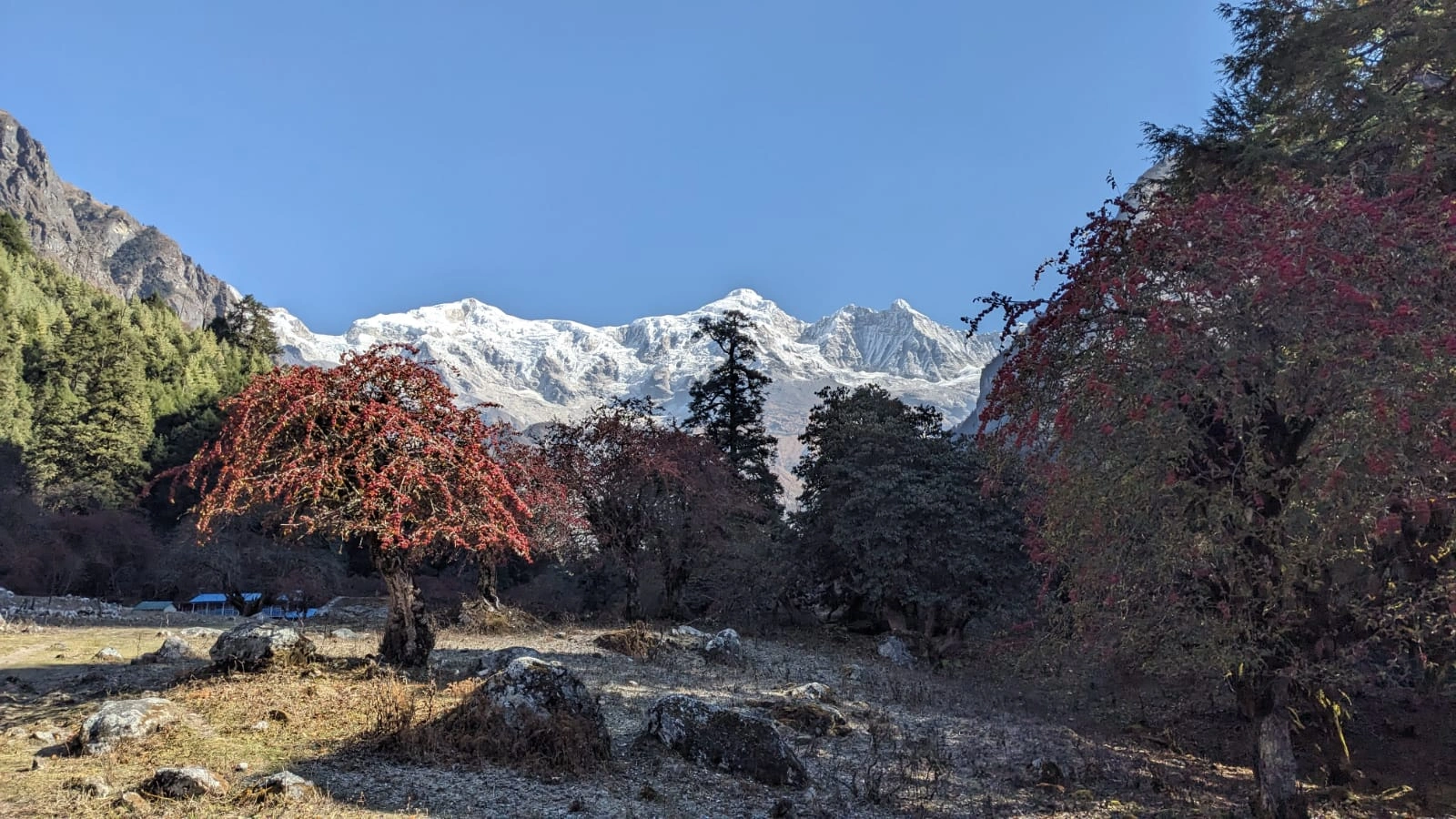
The rhododendron forests between Syabrubesi and Lama Hotel are extraordinary in spring. Mid-March through April the trees along the trail are full of red and pink bloom. Warmer than autumn and slightly less crowded.
• Views: Very good, with some afternoon cloud build-up
• Temperature at Kyanjin Gompa: 8 to 15 degrees daytime
• Highlight: The rhododendron forest in full bloom is worth the trip on its own
Winter: December to February
The lower sections stay walkable and Kyanjin Gompa is reachable with proper gear. Snow is likely from Langtang Village upward. Beautiful and almost completely empty – but temperatures at Kyanjin Gompa can drop to -15 at night. For experienced, well-equipped trekkers only.
Monsoon: June to August
Heavy rain, trail erosion, leeches in the lower forest. Mountain views mostly gone. Not recommended for most trekkers. If you’re set on coming in June-August, Upper Mustang is a better option – it sits in a rain shadow and stays dry.
What to Expect on the Trail
Accommodation
Teahouse trek – small family-run guesthouses at each overnight stop. Quality has improved a lot since the 2015 rebuild. Most offer private rooms and basic facilities. At Kyanjin Gompa some lodges have hot showers for an extra fee. Higher up things get simpler, but usually warmer in spirit.
I know the best tea houses on every section of the route – the ones with good food and the kind of family hospitality that makes you feel like a guest rather than a booking.
Food
Dal bhat is the trail staple – rice, lentil soup, vegetable curry, pickles. Unlimited refills. It’s genuinely the best energy food at altitude. You’ll also find Tibetan bread, momos, noodle soup, omelettes, basic international options. At Kyanjin Gompa, the yak cheese from the local cheese factory is something you won’t find anywhere else in Nepal. Get some.
Wildlife
The Langtang National Park is biodiverse. On the forest section between Syabrubesi and Lama Hotel there’s a real chance of spotting a red panda in the bamboo groves. Himalayan thar, langur monkeys, and various birds are common throughout. Above Kyanjin Gompa, yak herds graze the high alpine meadows.
What Else Can You Do With Janak?
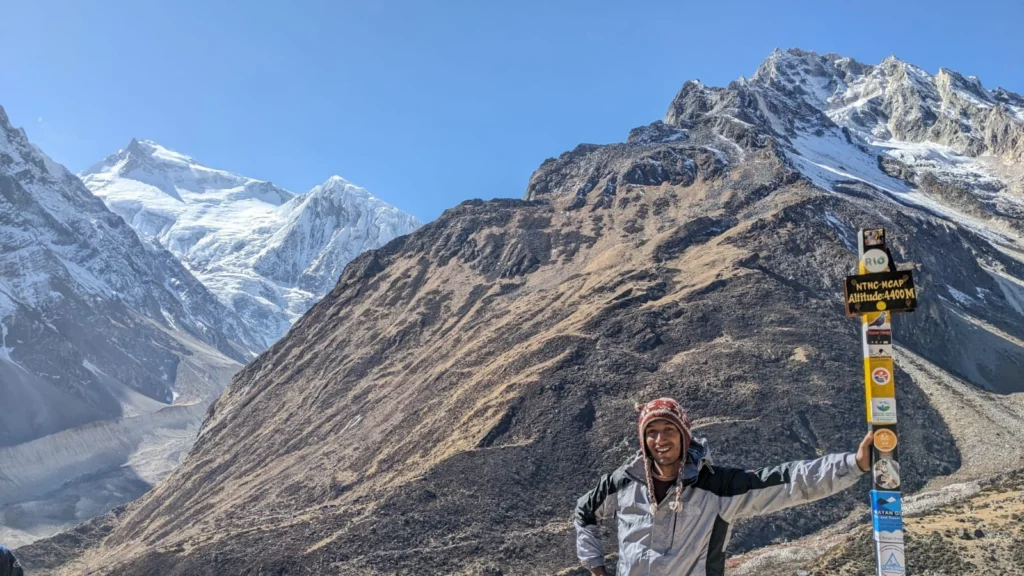
Langtang is one of five routes I guide across Nepal.
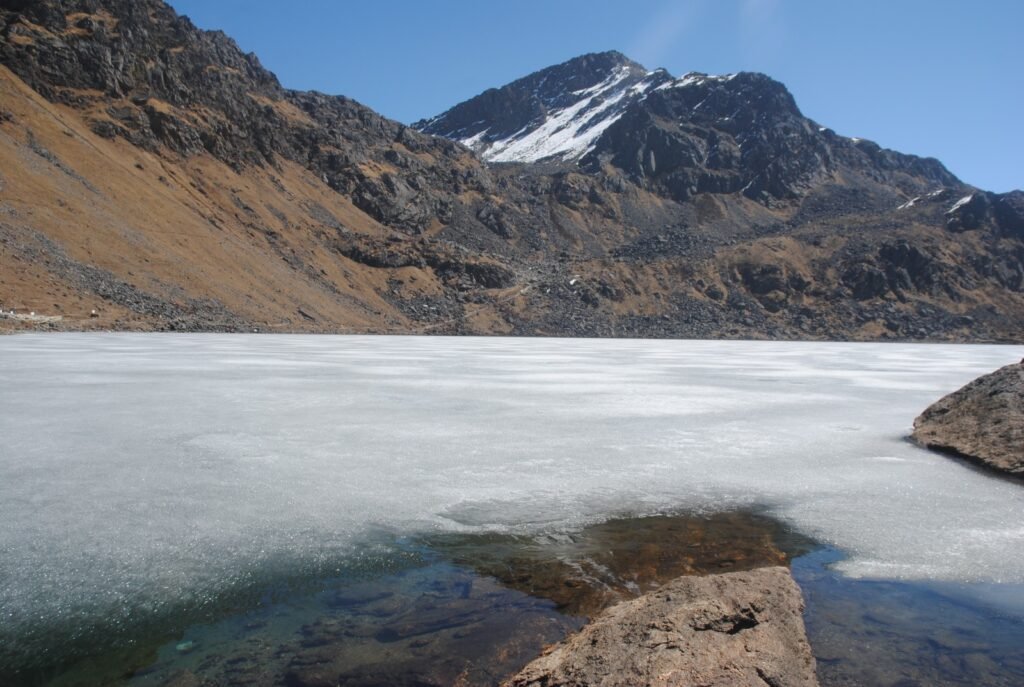
• Gosaikunda Extension – from Kyanjin Gompa you can cross into the Gosaikunda Lakes (4,380m) via Laurebina La pass. 108 sacred alpine lakes, stunning on a clear day. Adds 4-5 days. Best for acclimatised trekkers.
• Annapurna Circuit Trek – if Langtang leaves you wanting more, the Annapurna Circuit is the natural next step. Longer, more varied, crosses the world-famous Thorong La Pass at 5,416m.
• Manaslu Circuit Trek – remote, restricted, and genuinely raw. Circles the 8th highest mountain in the world. Requires a licensed guide.
• Upper Mustang Trek – the Forbidden Kingdom. Extraordinary cultural trekking, open to fewer than 1,000 visitors per year. • Himalayan Farm Stay – my family’s working farm in Ruby Valley. For people who want to experience Nepal without a trail under their feet.
Ready to Go?
Langtang is the trek that people who’ve done Everest Base Camp and Annapurna often say they wish they’d found sooner. It’s shorter, cheaper, easier to get to, and carries more emotional weight than either of those more famous routes because of what this valley survived.
Come with someone who knows it properly. Not from a training course but from years of walking it, talking to the families here, and watching trekkers from all over the world stand at Tserko Ri in the early morning and go quiet.
I answer every inquiry myself. Tell me your dates, how fit you are, whether you’re coming solo or with others, and I’ll put a plan together for you.